Seven Years On-Chain: From NYC Neon to PAPER TRAIL
How a collage practice in Edinburgh became an archive, and the archive became the material.
I became a full-time artist in 2017, working in collage: billposters, magazines and fragments of the city, cut and layered by hand. I didn’t know yet that the blockchain would give that practice a second life.
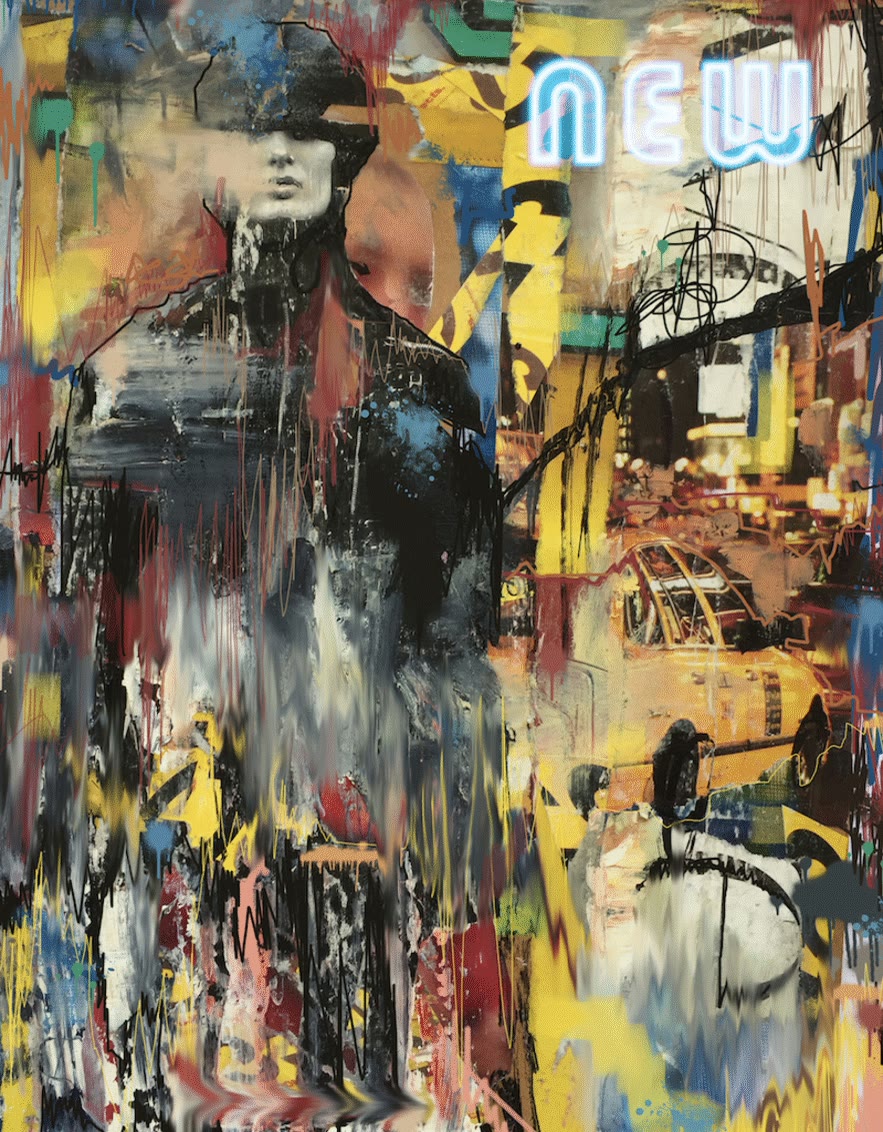
2019: the first sale
In July 2019 I minted a digital work called NYC Neon on SuperRare. It sold within days. There was hardly a market, nobody wrote about it, and most people I told thought the idea was absurd: that a digital image could be an original, owned and collected like any other artwork.
I kept minting anyway. Over the next two years I worked across SuperRare, KnownOrigin, Rarible, Manifold and OpenSea, carrying the language of collage on-chain: Baroque drama, silver-screen glamour and digital graffiti.
2020–2021: the world catches up
Then the world noticed. NBC News covered how blockchain reached the art world. In May 2021 The Washington Post opened its story on cryptoart with mine: a Scottish artist who had made “her own quiet but life-changing digital art sale” a year and a half before Beeple’s $69 million Christie’s sale.
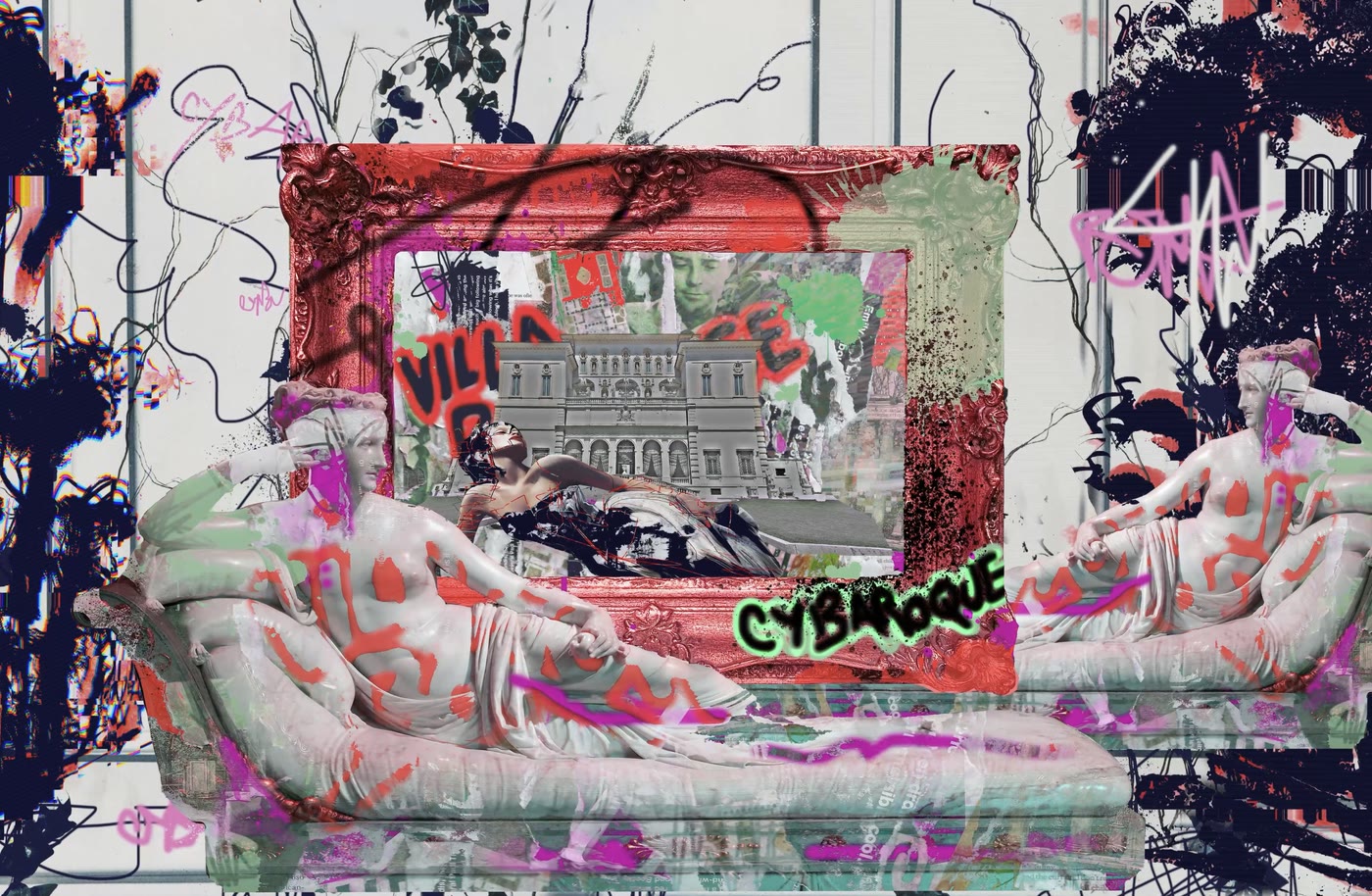
In June 2021 Bonhams and SuperRare held CryptOGs: The Pioneers of NFT Art, Bonhams’ first NFT sale, and my work CYBAROQUE BORGHESE was part of it. The works were screened at Bonhams’ New Bond Street headquarters in London during Contemporary Art Week. In 2022, nft now named me one of the Top 100 NFT Artists in the World.
2022–2025: from ink to cinema
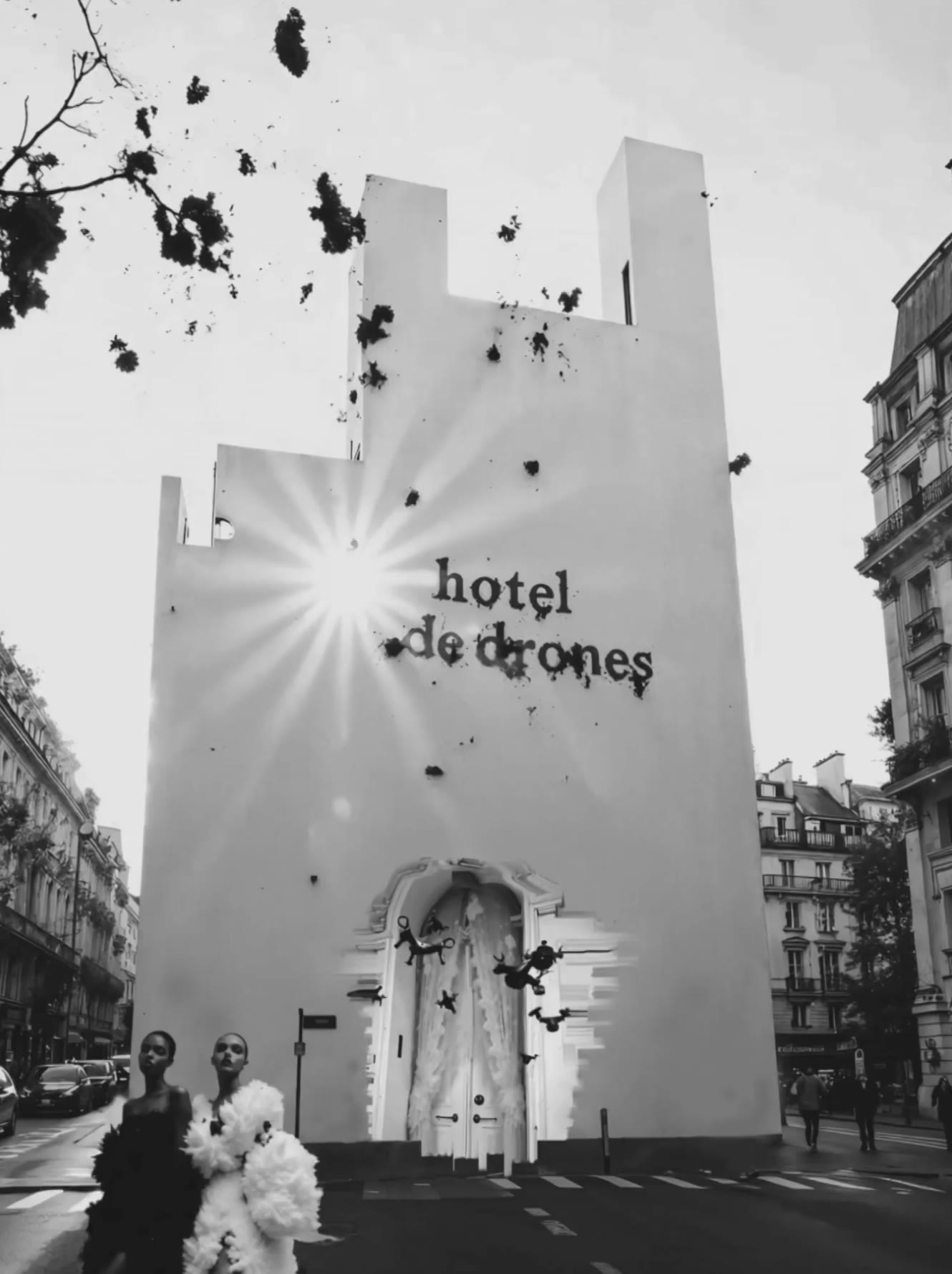
The boom ended, the market crashed, and I kept going. I trained models on my own Ink Interventions, the hand-drawn marks I make over images, and began to make AI cinema: films in which women move through cities with drones as companions, guards or silent witnesses.
In 2025 one of those films, Les Drones de la Banlieue, sold at Sotheby’s New York in the Contemporary Discoveries sale, alongside works by Andy Warhol, Robert Rauschenberg, Richard Prince and Willem de Kooning.
2026: the archive becomes the material
By then I had made more than fourteen thousand works. That is no longer a back catalogue. It is an archive, and this year I began to treat it as material.
In March, Scotland passed the Digital Assets (Scotland) Act 2026, which recognises qualifying digital assets as property in Scots law. My work is now held by my own company, MISS AL SIMPSON LIMITED. The question I kept returning to was what an artist can build from seven years of her own on-chain work.
The answer is PAPER TRAIL, launched on OpenSea on 5 October 2026: four thousand 1/1 collages. A machine I built, the Archive Engine, cut them from seven years of my own archive, from 2019 to 2026, and set each one with a figure and a ground generated on a model fine-tuned on my own work. The machine makes the cuts. I set the rules and review what comes out. Collage was always about taking things apart to say something new; this time the thing being taken apart is my own history.
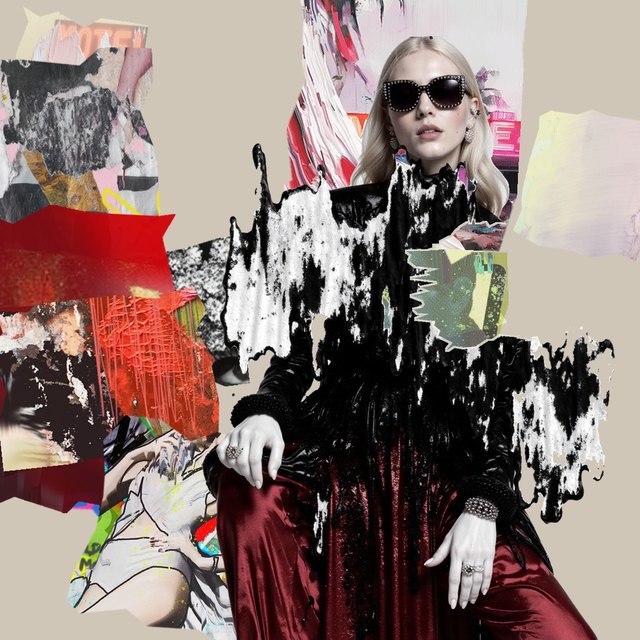
The record travels with the work
Every PAPER TRAIL work carries a RUTHVEN Origin Passport. It is a record of where the work came from, written the moment it was made: every piece, every source work and every year, fingerprinted and anchored on IPFS. Any collector can check a work against its record in their own browser.
When I sold NYC Neon in 2019, the chain could prove who owned the work, but not where it came from. Seven years later, it can prove both.
The machine takes the archive apart. PAPER TRAIL rebuilds it. RUTHVEN records how it happened.